Buying guide
Custom Plush Toys & OEM Toy Manufacturing: From Idea to Shipment
How custom plush toys are made, step by step: design, sampling, materials, own-brand packaging and quality checks — and what buyers should prepare at each stage.
In brief
What you’ll learn
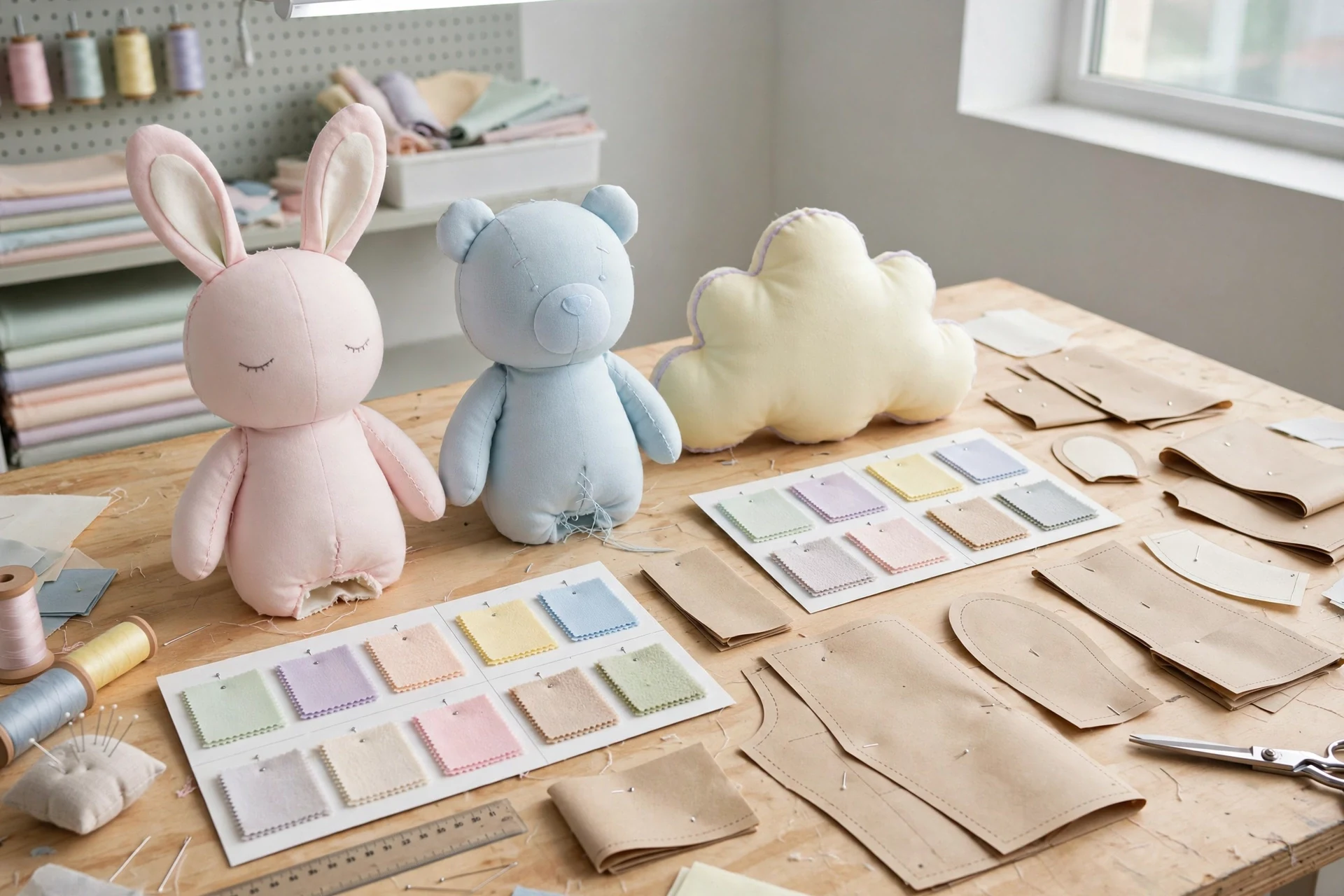
Custom plush toys are made in a fixed order: idea and artwork, a production pattern you approve on paper, a sewn sample revised in one consolidated round, material and feature choices locked in writing, own-brand packaging files sent early, then bulk production matched against the sealed sample and checked before shipment.
Overview
A private-label plush line starts as a sketch or a reference photo — and becomes shelf-ready stock only if each production stage happens in the right order. This guide walks wholesale buyers, importers and online sellers through how custom plush toys are made with an OEM toy manufacturer: what to prepare at each step, what to confirm, and where projects most often lose time to rework.
Step 1–2: From idea to an approved design
Send the factory your artwork, a reference photo, or a description with target size and price range. A custom stuffed animal manufacturer converts that into a production pattern — the flat template that fixes proportions, face placement and seam lines. Prepare the clearest artwork you have (vector files are ideal) and your must-keep details: colours, expression, accessories. Then confirm the pattern drawing and material callouts before any fabric is cut — proportions are cheap to fix on paper and expensive to fix after sampling.
Step 3–4: Sampling, revision and material choices
The factory sews a first sample. Expect at least one revision round: ears sit differently than drawn, stuffing changes the shape, embroidered features shift. Review the sample in hand, not just in photos, and send all corrections in one consolidated list — drip-fed changes can restart the pattern each time. Material choices are locked at this stage: outer fabric (short-pile plush, minky, velboa), filling (standard PP cotton or softer options) and feature method (embroidery versus print, plastic versus embroidered eyes) all change the look and the unit cost. Confirm fabric, filling and features in writing on the approved sample; that specification is what bulk production is matched against.
Step 5–6: Own-brand packaging, then bulk production
Custom toys with your logo become a retail product at the packaging stage: a printed hangtag with your branding and barcode, and your format choice — header-card bag, colour box or display box. Send print-ready artwork early; a late barcode or a missing warning label found after printing is a classic rework point. The same applies beyond plush — on light-up and bubble toys, logo printing, your colour box and barcode are agreed at quotation stage, not after the deposit. Once sample, specification and packaging files are all approved, bulk production follows the sealed sample. Any change after this point reopens earlier steps.
Step 7: Quality checks and shipment
Before goods leave, check bulk against the approved sample: stitching, stuffing firmness, feature alignment, hangtag and barcode correctness, carton count. Agree the inspection method — third-party inspection, or factory photos and video of finished cartons — before production, not at the loading dock. This is also when you request the test reports appropriate for your destination market and confirm age grading and labelling match your market's requirements, as part of your own compliance file.
Before you start: what to have ready
- ☐ Artwork or reference images, plus the finished size you want - ☐ Target market (country) — it decides labelling, warnings and which test reports to request - ☐ Estimated first-run quantity and your target price range - ☐ Feature choices: embroidered or printed details, fabric and filling preferences - ☐ Packaging format and print-ready brand files, including your barcode - ☐ Original artwork only: designs copied from licensed characters or another brand's product cannot be produced — protected IP risks takedowns for your listing
Where HundredPower fits
HundredPower is an OEM toy manufacturer with a Shenzhen office and its own factory in Zhongshan, China, producing light-up toys, bubble toys and squishy toys, with custom plush projects run through the same design–sample–production process. Buyers come to us for OEM & ODM production under their own brand: logo application, custom colours and retail packaging made to your artwork. Standard catalogue lines can start from one case or trial quantities; custom projects are quoted design by design, because the right starting quantity depends on the design, materials and packaging.
Common buyer questions
Frequently asked questions
How do I start a custom plush toy project with a factory?
Send your artwork or reference photos, finished size, target market and estimated quantity. The factory develops the pattern and quotation from that brief, and you approve the design drawing before sampling begins.
What is the minimum order quantity for custom plush toys?
It depends on the design — size, fabric, feature complexity and packaging all move the number, so factories quote custom projects case by case. Share your design first; standard catalogue products can start from trial quantities or one case.
Can I put my own logo and branding on the toys?
Yes — that is the core of OEM production: woven or printed labels and hangtags on plush, logo printing on light-up and bubble products, and custom packaging (colour boxes, display boxes, barcodes) produced from your artwork files.
What should I check on the sample before approving bulk production?
Proportions and feature placement against your artwork, stitching, stuffing firmness, fabric and filling exactly as specified, and embroidered or printed details. Send corrections as one complete list, and keep the approved sample — bulk is checked against it.
How do I get a quotation or start a custom project with HundredPower?
Send your design or reference photo, target size, estimated quantity, target market and packaging requirements through the inquiry form or WhatsApp/Messenger on hundredpower.com. The team replies with the options, the sampling process and a quotation.
Put the guide to work
Send a clearer toy sourcing brief.
Share the product, expected quantity, target market, packaging, destination and open questions. The HundredPower sourcing team will review the project context before the next quotation step.